
What happens when the rescue we’re counting on never arrives?
The election doesn’t change things the way we hoped. The market doesn’t recover on schedule. The people we trusted turn out to be part of the problem. And the promised breakthrough keeps moving further into the future.
For some, the answer is to double down on optimism. For others, it’s to surrender to cynicism.
But what if both responses leave us vulnerable to the same problem?
Both can cause us to stop confronting reality.
This is the tension Admiral James Stockdale wrestled with as a prisoner of war in Vietnam—and it’s a tension that shows up in Wild Horse Nine, the biblical story of Job, and the days between Jesus’ crucifixion and resurrection.
How do we face the most difficult layers of reality without losing the hope that equips us to endure them?
The Optimists Who Didn’t Make It
In Good to Great, author Jim Collins recounts a conversation with Admiral Stockdale, who spent years as a prisoner of war in Vietnam.
When Collins asked who didn’t make it out, Stockdale’s answer surprised him.
“Oh, that’s easy,” he said. “The optimists.”
Stockdale explained that these were the men who believed they would be home by Christmas. When Christmas came and went, they looked to Easter. Then Thanksgiving. Then Christmas again.
According to Stockdale, the repeated disappointment broke their hearts.
Then he offered Collins the insight that became known as the Stockdale Paradox:
“You must never confuse faith that you will prevail in the end—which you can never afford to lose—with the discipline to confront the most brutal facts of your current reality, whatever they might be.”
At first, the two halves of that statement seem like they’re pulling in opposite directions.
How do we retain faith that we will prevail while confronting facts that suggest we might not?
By recognizing that faith in an ultimate outcome is not the same thing as confidence in our preferred timeline or method of rescue.
The optimists Stockdale described weren’t wrong to want freedom. Their vulnerability was tying their hope to a date they couldn’t control.
When Christmas failed them, they needed another milestone. And another. And another.
Eventually, the milestones themselves became part of the problem.
The Collapse of Political Optimism in Wild Horse Nine
Spoilers ahead

In Wild Horse Nine (a story of a dying CIA assassin), Monica is a Chilean activist who believes change is possible. But the world she’s navigating is more dangerous—and more entangled—than she realizes. A key relationship Monica thought she understood turns out to be connected to the very forces working against the political future she wants.
That’s a difficult reality to confront.
It’s one thing to know you have opponents. It’s another to discover that someone close to you is connected to the machinery undermining your cause.
John Malkovich’s character, Chris, is a dying CIA operative who understands that machinery from the inside (part of it trying to break free from it). And as I watched the film, I was struck by the bleakness of what his perspective suggests: the forces at work are so powerful and so willing to use violence that Monica’s political hopes appear painfully vulnerable.
The movie pushes us toward an uncomfortable question:
What happens when the people and processes we’re counting on to produce change are themselves compromised?
One response is denial. We keep believing the next action, the next leader, or the next political victory will fix everything.
Another response is despair. We conclude that meaningful change is impossible—and that violence or a desperate last stand are all that remain.
But there’s a difference between these two statements:
- The rescue I expected didn’t come.
- There is no possibility of redemption.
The first may be a brutal fact.
The second is a conclusion about the whole story—and one we may not be in a position to make.
The Election, the Market, and the Next Counterfeit Milestone
Let me give you an example of how this dynamic can show up outside a movie.
One might believe the economy will stabilize once an election changes the balance of political power. Or, they might hope that markets will regain confidence once certain leaders are restrained, removed, or held accountable.
We might expect a major wealth transfer, a financial breakthrough, or some other dramatic reversal that will finally relieve the pressure we’re facing.
To steelman those hopes: political change can matter. Institutions can limit destructive behavior. Accountability can restore confidence. Markets can recover. And unexpected provision does happen.
The problem isn’t that we hope for these things. The problem is what happens when we quietly turn a possibility into a promise—and then place the weight of our salvation on it.
What if the election doesn’t produce the stability we expected?
What if the market takes longer to recover than our forecast predicted?
What if the leaders we trusted disappoint us—or the wealth transfer never arrives in the form we anticipated?
I’m not suggesting we stop participating in politics, planning for the future, or looking for opportunities. I’m suggesting we examine the role those expectations are playing in our lives.
Are they informed possibilities we can work toward?
Or have they become counterfeit milestones we need to arrive on schedule so we don’t have to face how uncertain things really are?
Political change can be important without being our savior.
And if I only apply that warning to the other political tribe, I’ve missed the point. My own preferred leaders, explanations, and predictions can become blind spots, too.
Stop Waiting for Rescue—Start Living Intentionally
I’ve had to confront this pattern in my own life. In 2010, I found myself waiting for my business to become successful—and for the right person to come along and fulfill my vision for the company. I was imagining the future I wanted while waiting for circumstances to make it possible.
Then I met Joe Kissak, author of The Fourth Fisherman. He told me about fishermen stranded at sea for months and described how some waited for rescue rather than doing the difficult work of survival.
That conversation exposed something I didn’t want to see: I was waiting for rescue in my business, too.
The fishermen couldn’t control the ocean or guarantee when help would arrive. But there were things they could do: collect rainwater, catch food, tend to their minds, and talk with one another. Their situation was not the same as mine—and their survival is not a simple measure of effort. Still, their story challenged me to ask what was within my responsibility.
What could I do today to prepare for the future I hoped for, rather than waiting for someone else to create it?
For me, that meant stepping up, following through on commitments, and holding myself accountable when I couldn’t. At Noodlehead Marketing, 2011 became our year of intentionality. We eventually experienced a breakthrough, but the lesson was not that effort guarantees the outcome we want.
Hope can free us to act in the present instead of postponing our lives until rescue arrives.
There is a difference between waiting patiently for something beyond our control and surrendering the responsibilities and opportunities we still have. Sometimes the next faithful step is practical action. Sometimes it is receiving help, resting, or enduring what we cannot change. None of those choices makes us responsible for the harm done to us or guarantees a rescue.
In that earlier reflection, I connected this lesson to Oswald Chambers’s writing on taking initiative. I don’t take that to mean God is absent until we act. Rather, it reminds me not to confuse trust in God with the belief that I have nothing to do while I wait.
Cynicism Is Not the Same Thing as Seeing Clearly
There’s another trap here.
When we recognize how often optimism fails, cynicism can feel like wisdom. If we expect the worst, perhaps we can protect ourselves from another broken heart.
But cynicism has its own form of certainty.
The optimist says, “Rescue will arrive by Christmas.”
The cynic says, “Rescue will never arrive.”
Neither necessarily knows.
And while the cynic may see genuine corruption, betrayal, or danger more clearly than the optimist, they can still make the mistake of turning those facts into a final verdict on what is possible. They can self sabotage in a fatalistic direction.
That’s where I want to step into the tension Stockdale describes.
Confronting brutal facts doesn’t require us to surrender hope. And retaining hope doesn’t require us to pretend the facts aren’t brutal.
But that raises a deeper question: What kind of hope can actually survive when our expectations collapse?
Helm’s Deep and the Limits of the Rescue Metaphor
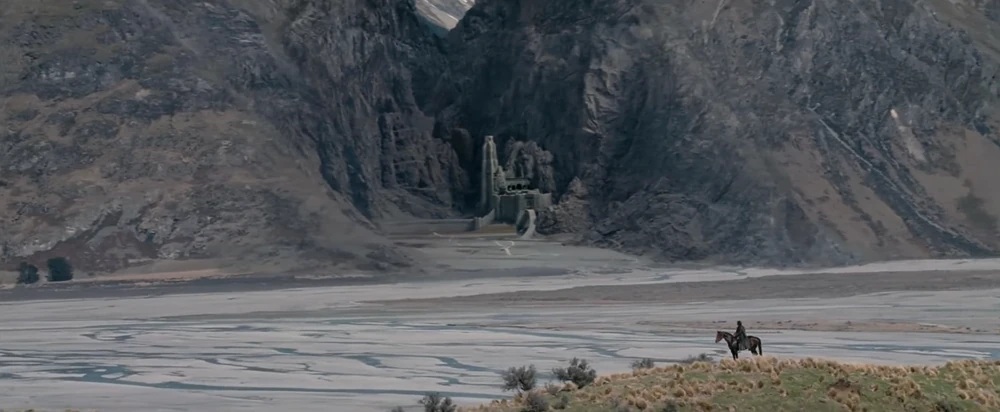
In The Lord of the Rings, the battle at Helm’s Deep reaches a point where defeat appears inevitable. The defenders are outnumbered. The losses are real. Their stronghold is failing.
And then Gandalf arrives with the riders of Rohan.
What looked like the end becomes a turning point.
It’s a powerful picture of deliverance—but there’s an important limitation to the analogy.
Real life doesn’t promise that the cavalry will arrive at sunrise. We can’t assume every political defeat will be reversed, every financial loss recovered, or every painful situation resolved in the way we want.
If I use Helm’s Deep to insist that my rescue is guaranteed to arrive on my schedule, I’ve turned the story into another Christmas deadline.
The value of the image is something else: the moment that looks like the end from where we stand may not be the whole story.
That doesn’t eliminate the darkness. It challenges our certainty that darkness gets the final word.
And for me, as a Christian, that takes us to a deeper story.
Between the Cross and the Resurrection
It’s easy to read the story of Jesus’ crucifixion from the other side of Easter.
We know the resurrection is coming.
But, it's important to remember: His followers experienced those events in sequence.
Jesus had told them he would be killed and raised on the third day. But in the moment, the reality in front of them seemed to tell a different story: their teacher had been arrested, beaten, and crucified. His body was placed in a tomb.
Whatever they had heard from him before, they now had to live through what appeared to be a devastating ending.
And the Gospel accounts don’t portray the disciples as people who immediately understood everything. In Luke 24, the women at the tomb are reminded of Jesus’ words, and when they report what happened, the apostles initially do not believe them.
That matters.
Because there is a difference between having heard a promise and knowing how to hold onto it when the evidence in front of you appears to contradict it.
The disciples were living in the space between the cross and the resurrection—between what Jesus had said and what they could presently see.
We know that space, too.
Not because our circumstances are identical to theirs, or because every loss in our lives will be reversed within three days. But because we know what it is to live after something has fallen apart and before we can see what comes next.
In that space, we may be tempted to deny the loss. Or we may declare the loss to be the final word.
The Christian story invites a different response: tell the truth about the cross without assuming the cross is the end of the story.
Job, His Friends, and the God He Refused to Give Up On
This brings us to Job. In Our Ultimate Refuge, Oswald Chambers explores Job’s suffering and the inadequate explanations offered by his friends. They want to make sense of what has happened by fitting it into a familiar framework: if Job is suffering, our moral explanation makes the situation understandable.
But Job knows the explanations they’re offering don’t account for the reality he is experiencing.
And he refuses to accept them simply because they sound religious (or how confident they are in them).
What stands out to me in Chambers’s treatment is that Job continues to wrestle toward God while resisting the distorted picture of God his friends present. He grieves, questions, protests, and argues—but he does not resolve the tension by pretending his suffering is insignificant or by settling for an answer he believes is false.
As I understand it, Job is holding out hope that a good God is there, even when that goodness is difficult to see—and even when the explanations offered in God’s name seem to point somewhere else.
That is not passive optimism.
It is a refusal to surrender either truth or the possibility of God’s goodness.
And perhaps that’s part of what equips us to endure: not having an immediate explanation for every layer of suffering, but having a place to bring our questions without pretending we’ve already solved them.
What Are We Placing Our Faith In?
Stockdale’s paradox gives us a powerful discipline:
- Confront the brutal facts of your current reality.
- Retain faith that you can prevail in the end.
But as a Christian, I want to ask a further question:
What—or whom—is that faith in?
If my faith is ultimately in a political party, a market forecast, a leader, or a promised financial breakthrough, then my hope rises and falls with those things.
If my faith is in my ability to explain every tragedy, then suffering I can’t explain will threaten it.
But if my hope is rooted in the character of God revealed in Jesus—a God who enters suffering rather than remaining distant from it—then I have somewhere to stand even when I don’t understand what comes next.
That doesn’t mean I know the outcome of every situation.
It doesn’t mean I’ll avoid grief, financial loss, political disappointment, or betrayal.
It doesn’t mean I can attach God’s name to my preferred timeline and call it faith.
It means I can confront those realities without assuming they are the ultimate reality.
For Christians, the resurrection is not a shortcut around the cross. It is the reason death does not have the final word.
A Framework for Facing Reality Without Losing Hope
So what might this look like in practice?
1. Name the facts you would rather avoid.
What is actually happening—in your finances, your relationships, your community, or your country?
Separate what you know from what you suspect and what you hope will happen. Invite trustworthy people to challenge your blind spots.
The truth doesn’t become less true because it’s uncomfortable.
2. Identify the milestone carrying too much weight.
Are you telling yourself everything will be okay if a particular election goes your way, the market recovers by a certain date, or someone finally comes through for you?
Those outcomes may matter. But can your hope survive if they don’t happen?
3. Challenge the explanations that make reality too simple.
Job’s friends offered a framework that seemed to explain his suffering. But an explanation can be confident, religious, and wrong.
The same is true of our political and economic stories. When one person, party, or event becomes the explanation for everything, we may be missing the system—and our own role within it.
4. Make room for grief, questions, and uncertainty.
The disciples’ confusion did not make the cross less real. And Job’s questions did not make his suffering disappear.
Faith doesn’t require us to call evil good or pretend loss doesn’t hurt. It gives us permission to bring the full truth into the light.
5. Take the next faithful step.
We may not control the election, the market, or when relief arrives. But we can tell the truth, care for people, act responsibly, prepare for uncertainty, and work for change without pretending we can guarantee the result.
The next step may be practical. It may be relational. It may simply be refusing to give up on God while admitting that you don’t understand what he’s doing.
Don’t Confuse the Failed Milestone With the End of the Story
The optimists Stockdale described kept looking toward the next date. When that date came and went, they needed another one.
Many of us do something similar with politics, money, leaders, and the future.
But the failure of our expected rescue is not proof that hope itself has failed.
And the presence of hope is not an excuse to avoid the truth.
So here is the challenge: What brutal fact do you need to face—and what counterfeit milestone have you been asking to save you?
Name both.
Then, rather than surrendering to denial or despair, take the next step. Tell the truth. Hold your expectations with humility. And, even in the space where you cannot yet see what comes after the loss, refuse to assume that the loss gets the final word.
Related Content


